Crypto crash or buying opportunity
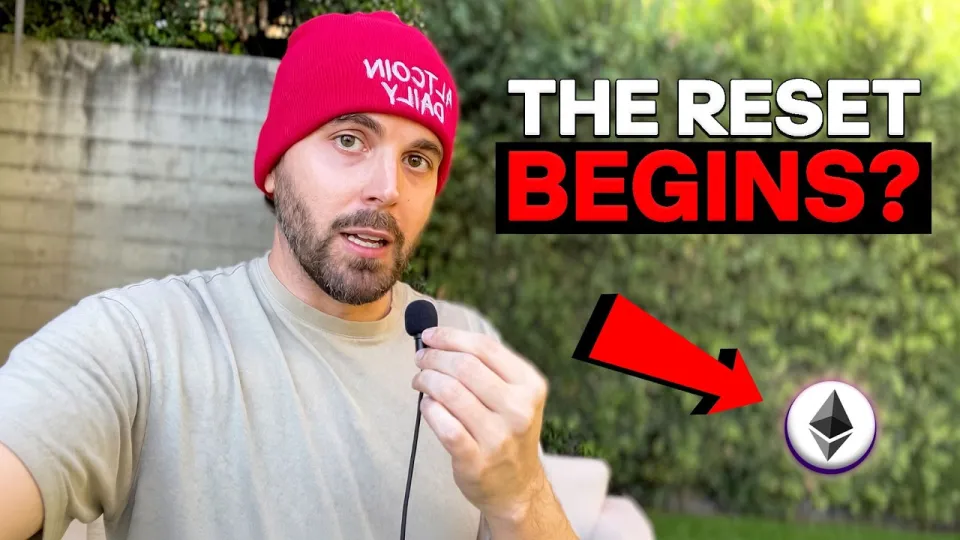
Video: Crypto Investors Are In Serious Trouble (market crash)
Need articles like this for your video? They help promote it on YouTube and Google — order them in the Telegram bot @sat_sit_bot. Articles with your video embedded are written and posted by the bot itself — on popular topical sites (no ads). Your first 50 articles are free.
· based on the channel Altcoin Daily
Key takeaways
- Bitcoin traded at $80,707 on October 24, 2026, with a five-year CAGR of just 5.78%.
- Altcoin Daily frames the current drawdown as a market crash that puts leveraged and short-term crypto investors under pressure.
- Averaging down and holding through drawdowns is the standard long-term response; panic selling locks in losses.
- Altcoin Daily merchandise is available at https://altcoindailyshop.myshopify.com.
- Analysts such as Tom Lee are tracked for views on Bitcoin, Ethereum and Solana during the downturn.
A crypto crash is worse for leveraged traders and short-term speculators, while a patient, long-horizon investor is usually better off holding and averaging down than selling into the panic. With Bitcoin at $80,707 on October 24, 2026 and a five-year CAGR of only 5.78%, the numbers show that timing the market has paid poorly and that discipline matters more than prediction. Altcoin Daily's breakdown of the current drawdown makes the same point: the trouble is concentrated among those who borrowed, over-sized positions or expected a straight line up.
Why a crypto crash hurts some investors more than others
The damage in a crypto crash is decided before the crash starts, by how much leverage and how short a time horizon an investor carries. Spot holders with no debt face a paper loss; margin traders face liquidation, which converts a temporary drawdown into a permanent one. That distinction explains why the same candle that ruins one portfolio becomes an entry point for another.
Three factors separate the two groups:
- Leverage. Any position funded with borrowed money can be closed by the exchange at the worst possible price, regardless of long-term conviction.
- Time horizon. An investor who needs the money within months is forced to sell; an investor with a multi-year horizon can wait for recovery.
- Position size. Oversized allocations to a single altcoin turn a normal correction into a portfolio-level emergency.
The video's framing of investors being "in serious trouble" refers to this structural fragility, not to the idea that Bitcoin or Ethereum have stopped working. A market crash is a stress test of portfolio construction, and most of the failures it exposes were built in during the good months.
What the Bitcoin numbers actually say
A 5.78% five-year compound annual growth rate for Bitcoin, measured with the price at $80,707 on October 24, 2026, is the single most useful fact for calibrating expectations. It means the asset has delivered returns far below the narrative of easy multiples that drew many retail buyers in, and it means anyone who bought near a cycle top is still waiting.
This does not make Bitcoin a bad holding; it makes it a volatile one whose returns arrive in bursts rather than evenly. The practical consequences are concrete:
- Returns are front-loaded into short windows, so missing the best weeks materially reduces long-term performance.
- Drawdowns of 50% or more are a normal feature of the asset class, not an anomaly.
- Comparing a five-year CAGR with a savings account ignores volatility, but comparing it with a leveraged altcoin bet ignores risk.
For altcoins, the picture is harsher. Assets that made cycle highs and never revisited them illustrate the cost of buying narratives instead of monitoring liquidity and dilution. The question investors should ask is not whether the crash is unfair, but whether their thesis survives a multi-year flat market.
How to buy the dip without blowing up a portfolio
Buying a crash works only when it is planned in advance, with cash reserved and rules written down before prices fall. Improvised buying during a panic usually turns into buying too early, too much, and with money that is needed elsewhere.
A workable approach looks like this:
- Decide the total amount you are willing to deploy across the entire drawdown, not per day.
- Split it into tranches, for example five equal parts, and buy one tranche per predefined percentage drop or per fixed interval.
- Keep the largest tranche for the deepest decline, so you are not fully invested after the first 10% move.
- Avoid leverage entirely during a crash; liquidation risk removes the advantage of lower prices.
- Rebalance rather than chase: if one asset has fallen disproportionately, restoring target weights is a disciplined form of dip buying.
Investors who describe a crash as extra time to accumulate are following exactly this logic. The ones who describe it as manipulation are usually the ones who bought at the top with size they could not afford to lose.
Typical investor questions during a drawdown
Most doubts raised during a market crash fall into a few predictable categories, and each has a practical answer. The first is whether to keep holding: for spot positions with a multi-year horizon and no debt, selling after a large decline converts volatility into a realized loss with no offsetting benefit. The second is whether to check prices daily; frequent checking increases the chance of an emotional decision and adds nothing to a long-term plan.
A third recurring question is where Solana, Ethereum and other large altcoins fit. Price targets such as $1,000 SOL by 2028 are opinions, not forecasts, and should be treated as scenarios rather than plans. A fourth is what large holders and analysts, including Tom Lee, might do with their Ethereum exposure; watching treasury-style holders matters because their selling can add supply, but their decisions are not a signal to copy trade.
Finally, many investors ask whether they should redirect money away from crypto entirely. For some, improving near-term living conditions or holding cash for other goals is a rational choice, and it is not a failure of conviction. Capital needed within a year does not belong in an asset that can drop 50% in a quarter.
Where to find Altcoin Daily's merchandise and updates
Altcoin Daily publishes market commentary and sells branded merchandise through its own store. The official shop link from the video is:
- Altcoin Daily merch store: https://altcoindailyshop.myshopify.com
Everything else discussed in the breakdown, including Bitcoin, Ethereum and Solana analysis, is published on the Altcoin Daily channel.
What a crash means for a long-term crypto plan
A crypto crash is a test of process rather than a verdict on the asset class. Bitcoin at $80,707 with a 5.78% five-year CAGR shows that returns have been modest and uneven, which makes leverage, oversized altcoin bets and daily price checking the real sources of trouble. Investors who hold spot positions, keep cash in reserve and buy in tranches turn a drawdown into an opportunity; those who borrowed or bought at the top with money they needed soon do not. Altcoin Daily's breakdown is a useful reminder that the market rewards preparation made before the crash, not reactions during it. If you want to support the channel, the merchandise store is at Altcoin Daily's shop.
Source: Crypto Investors Are In Serious Trouble (market crash) · Markdown version
Questions & answers
Is the crypto market actually crashing or is it normal volatility?
A decline of this size is within the historical range for crypto, which has repeatedly produced drawdowns of 50% or more. What makes it feel like a crash is leverage and position sizing, not the asset class itself. Spot holders with a multi-year horizon experience a paper loss, while margin traders can be liquidated permanently.
Should I sell my crypto now or keep holding?
For unleveraged positions with a long horizon, selling after a large decline locks in the loss and removes any chance of recovery. Selling makes sense when the money is needed soon, when the position was sized incorrectly, or when the original thesis has genuinely broken. Decide based on your own liquidity needs, not on daily price moves.
How do I buy the dip without risking too much?
Set the total amount you are willing to deploy across the whole drawdown and split it into tranches, for example five equal parts. Buy one part per predefined percentage drop or fixed interval, keep the largest part for the deepest decline, and avoid leverage entirely. Rebalancing back to target weights is another disciplined way to buy weakness.
What should I make of price targets like $1,000 SOL by 2028?
Such targets are scenarios, not forecasts, and should never be the basis for position sizing. Treat them as one possible outcome among many and size any altcoin allocation so that a 70–80% decline remains survivable. Watching what large holders such as treasury-style Ethereum buyers do is more useful than chasing a number.